
Low Dust Sandblasting
Abrasive Supplier
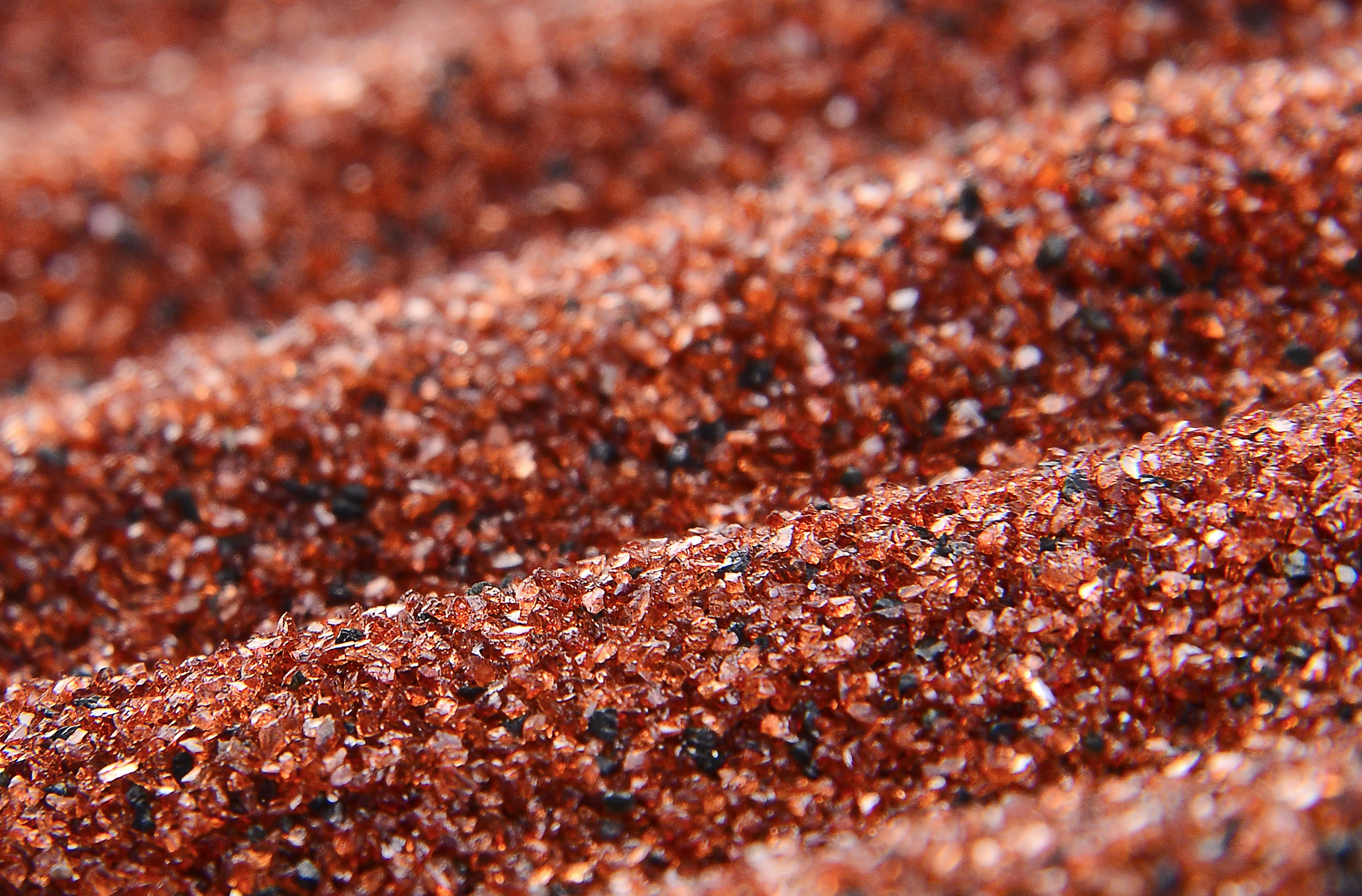
OneGarnet™ garnet blasting media is Class 1 dust certified — less than 0.1% respirable dust and no free silica above 0.5%. Compliant with TRGS 559, COSHH, and European occupational health directives.
Why Dust Class Matters
in Abrasive Blasting
Respirable dust in abrasive blasting is a leading cause of occupational lung disease worldwide. Abrasive choice is the single largest variable controlling dust generation on any blast site. Lower dust class means lower health risk, lower containment cost, and easier compliance with German TRGS 559, UK COSHH, and EU occupational exposure limits.
Regulatory Compliance
German TRGS 559 (Mineralischer Staub), EU Directive 2017/2398 (carcinogens at work), and UK COSHH all require documented dust class for blasting abrasives. Class 1 satisfies every major European framework.
Worker Safety
Silicosis, COPD, and occupational lung cancer are directly linked to dust exposure during abrasive blasting. Switching from copper slag (Class 2–3) or silica sand (Class 4, EU-banned) to Class 1 garnet eliminates the primary exposure pathway.
Reduced Project Cost
Class 1 abrasives reduce air monitoring requirements, PPE upgrades, decontamination procedures, and waste disposal costs. Lower dust also means less cleanup between passes and faster project completion.
ISO 11126 Dust Classes
Explained
ISO 11126 Part 1 classifies abrasive blasting media into four dust categories based on total dust content and respirable fraction. OneGarnet™ achieves Class 1 — the lowest and safest category.
| Dust Class | Total Dust Content | Typical Abrasive | Health Risk | EU Permitted |
|---|---|---|---|---|
| Class 1 (OneGarnet™) | < 0.1% | Garnet (almandine) | Minimal | Yes |
| Class 2 | 0.1% – 0.5% | Some copper slag grades | Low–Moderate | Yes |
| Class 3 | 0.5% – 1.0% | Copper slag, coal slag | Moderate–High | Yes |
| Class 4 | > 1.0% (incl. silica) | Silica sand, slag derivatives | High — Silicosis risk | No / Restricted |
OneGarnet™ Dust
Specification Data
Every batch of OneGarnet™ garnet blasting abrasive is tested and documented for dust content, free silica, heavy metals, and conductivity under ISO 9001:2015 quality controls.
OneGarnet™ Blasting Abrasive
Class 1 Dust · Sa3JadeCut® Blasting Abrasive
Class 1 Dust · Sa2½–Sa3JadeCut® omphacite-almandine garnet also achieves Class 1 dust classification — delivering the same low-dust compliance at 30–50% lower cost than premium garnet.
European Dust Regulations
for Blasting Contractors
Industrial blasting contractors operating in Germany, the Netherlands, Belgium, France, and the wider EU face a tightening regulatory environment around abrasive dust. Class 1 garnet is the straightforward compliance path.
Germany – Mineralischer Staub (Mineral Dust)
Sets occupational exposure limits (OEL) for mineral dust in Germany. Requires documentation of abrasive dust class and free silica content. Class 1 garnet with < 0.5% free silica satisfies the TRGS 559 framework without triggering enhanced dust-control obligations.
EU – Carcinogens & Mutagens at Work Directive
Restricts occupational exposure to respirable crystalline silica (RCS). Effectively prohibits silica sand as a blasting abrasive across EU member states. Class 1 garnet is the primary compliant replacement — free silica well below the threshold that triggers RCS classification.
UK – Control of Substances Hazardous to Health
Requires risk assessment and exposure control for all hazardous substances used at work, including blasting abrasives. Class 1 garnet is explicitly listed as a compliant alternative to copper slag and sand under COSHH guidance for surface preparation.
ISO – Preparation of Steel Substrates
ISO 11126-7 specifies technical requirements for garnet abrasive used in surface preparation of steel. Defines dust class, particle size distribution, hardness, and conductivity. OneGarnet™ is tested and documented to ISO 11126-7.
Norway Offshore – Surface Preparation & Coating
The primary offshore corrosion protection specification used by Equinor, TotalEnergies, and major EPC contractors on the Norwegian Continental Shelf. Requires Sa3 cleanliness and documented dust class — both satisfied by OneGarnet™ Class 1 garnet.
SSPC – Mineral and Slag Abrasives
SSPC AB-1 qualification for abrasive materials used in industrial surface preparation requires testing for dust, conductivity, heavy metals, and free silica. OneGarnet™ meets all SSPC AB-1 requirements.
Low Dust Abrasive
Common Questions
What is a Class 1 dust rating for sandblasting abrasives?
Under ISO 11126 Part 1, Class 1 is the lowest and safest dust category — total dust content below 0.1%. Class 1 abrasives like garnet generate the least respirable airborne particulate of any commonly used blasting media, reducing health risk and containment costs versus Class 2–3 abrasives such as copper slag.
Is garnet sandblasting abrasive TRGS 559 compliant in Germany?
Yes. OneGarnet™ almandine garnet with free silica < 0.5% and Class 1 dust rating satisfies TRGS 559 requirements for blasting operations in Germany. This means no enhanced dust-control obligations beyond standard engineering controls are triggered by the abrasive itself.
Why is silica sand banned for blasting in Europe?
EU Directive 2017/2398 effectively prohibits silica sand as a blasting abrasive across the EU because free silica above 1% causes silicosis — an irreversible fatal lung disease — through respirable crystalline silica (RCS) exposure. Garnet with free silica < 0.5% is not classified as an RCS risk at typical Class 1 dust exposure levels.
How much does low dust garnet reduce project cost?
Lower dust generation reduces air monitoring frequency, PPE specification requirements, containment procedures, waste disposal volume, and clean-up time. In enclosed or confined-space blasting, switching to Class 1 garnet can reduce overall project duration by 10–20% compared to Class 2–3 abrasives like copper slag.
Can I order low dust garnet in bulk for Germany or Europe?
Yes. OneGarnet™ and JadeCut® — both Class 1 dust rated — are available in bulk to Germany, Netherlands, Belgium, France, and across Europe. Available in 25 kg bags or 1,000 kg big bags. Contact us for FOB and CIF pricing. Typical delivery lead time is 3–6 weeks.
Garnet Sandblasting Abrasive
Sa3 bare-metal cleanliness, NORSOK compliant, bulk supply Germany & Europe.
View Sandblasting GuideGarnet vs Copper Slag
Full dust class, heavy metal, and cost-per-m² comparison of garnet vs copper slag.
View Comparison GuideMesh Size Guide
Select the right garnet mesh grade for your surface profile and coating specification.
View Mesh Guide Ready to Switch to
Class 1 Dust Abrasive?
Request a bulk quote for Class 1 low-dust garnet sandblasting abrasive. We supply Germany, Netherlands, Belgium, France, and all European markets. Response within 24 hours.